
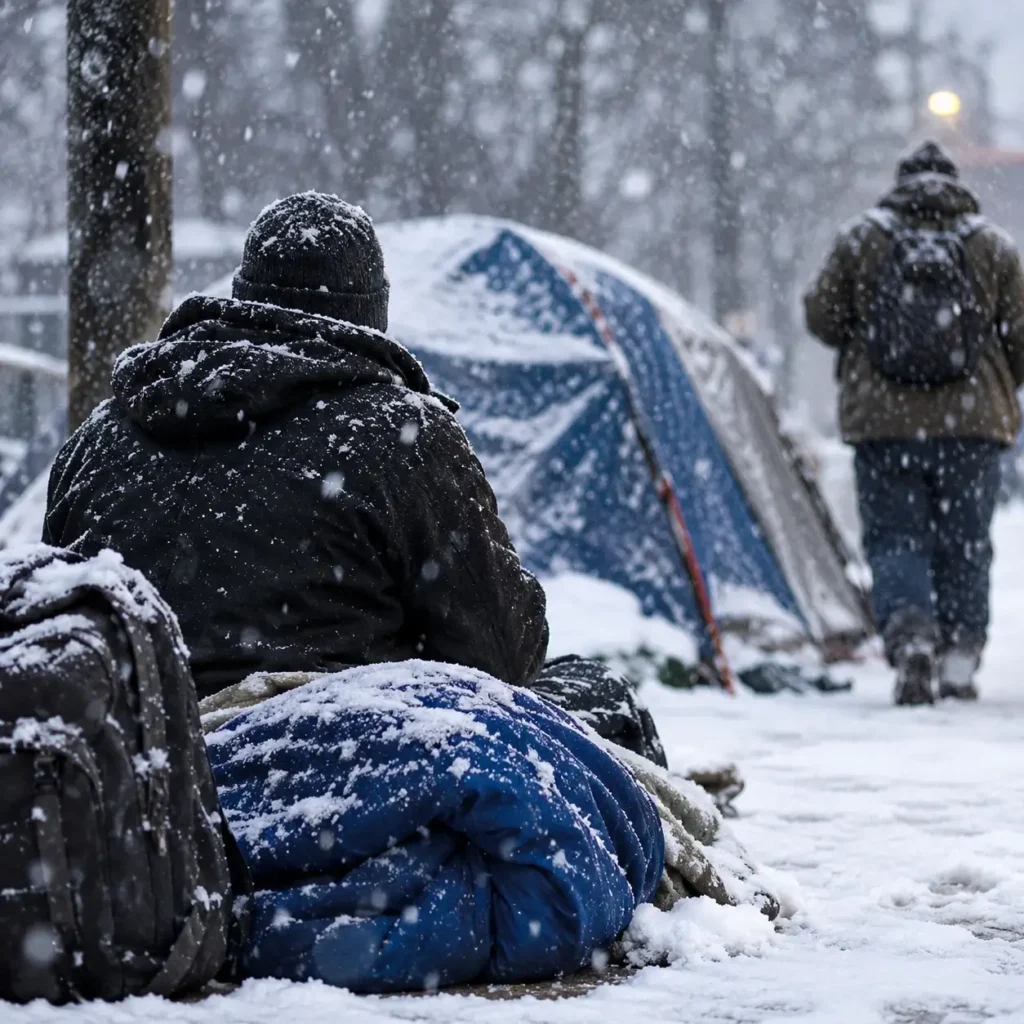
When the Temperature Drops, So Does the Margin for Safety: How Severe Winter Weather Affects People Experiencing Homelessness.
For most of us, a cold winter night means turning up the heat, grabbing an extra blanket, putting on a warm coat, or deciding to stay inside until the weather improves.
For someone experiencing homelessness, those choices may not exist.
A drop in temperature that is uncomfortable for someone with a warm home can become dangerous for a person sleeping outdoors, in a vehicle, in a tent, or in another place without reliable heat. Rain can soak clothing and bedding. Wind can make already-cold temperatures feel even more severe. Snow and ice can make it difficult to travel, find food, access services, or reach a safe place to sleep.
Winter weather doesn’t simply make homelessness more uncomfortable. It can make an already difficult situation significantly more dangerous.
People experiencing homelessness are among those at greater risk for hypothermia and frostbite because they may spend extended periods outdoors without adequate shelter, heating, clothing, or dry conditions. The Centers for Disease Control and Prevention specifically identifies people who remain outdoors for long periods, including people experiencing homelessness, as being at increased risk for hypothermia.
In South King County, preparing for severe winter weather is therefore about more than watching the forecast. It is about making sure people have somewhere safe to go when the weather becomes a threat to their health and safety.
Cold Weather Is More Than an Inconvenience
Our bodies work continuously to maintain a stable internal temperature. When we are exposed to cold for long periods, the body loses heat faster than it can produce it.
That is the basic problem behind hypothermia.
Hypothermia occurs when the body’s temperature drops to a dangerously low level. It can happen during extremely cold weather, but it does not necessarily require temperatures below freezing. According to the CDC, hypothermia can occur even at temperatures above 40 degrees when someone becomes chilled by rain, sweat or cold water.
For a person who has a warm home, getting wet on the way to the car may be an inconvenience. For someone living outside, being wet can become a serious problem.
Imagine spending the night in a tent that has become damp after hours of rain. Your sleeping bag is wet. Your shoes are wet. The clothes you’re wearing are wet. There is nowhere to dry them. You have no heater and no warm bed waiting for you.
Now imagine doing that night after night.
The body has fewer opportunities to recover from exposure to the elements. A person may spend the day walking in search of food, services, employment opportunities, a restroom, a charging station, or a place to stay warm. Then, as evening approaches, they must figure out where they will sleep.
For people without shelter, winter doesn’t offer much opportunity to simply wait out the weather.
Hypothermia Can Happen Before Someone Realizes They Are in Danger
One of the most concerning aspects of hypothermia is that it can affect a person’s ability to think clearly.
Early signs can include shivering, exhaustion and fatigue. As hypothermia becomes more serious, symptoms can include confusion, fumbling hands, memory problems, slurred speech and drowsiness.
That creates a dangerous cycle.
The colder someone becomes, the more difficult it may be for them to recognize that they are in danger or take the steps necessary to protect themselves.
A person may be trying to find shelter while already becoming confused or exhausted. They may be reluctant to leave their belongings behind. They may not know where a warming center is located. They may not have transportation. They may have a pet. They may be caring for another person. They may have mobility limitations.
Getting from one place to another can become much more difficult when the roads are icy or snow-covered.
What looks like a simple solution from the outside -just go somewhere warm-can be considerably more complicated for someone who does not have a home.
Hypothermia is a medical emergency. The CDC recommends immediate medical attention when a person’s temperature falls below 95 degrees Fahrenheit.
Frostbite Is Another Serious Risk
Hypothermia isn’t the only danger.
Frostbite is an injury caused by freezing. It most commonly affects exposed areas such as the fingers, toes, nose, ears, cheeks and chin. Severe frostbite can cause permanent tissue damage and, in the most serious cases, can result in amputation.
Frostbite can also be difficult to recognize because the affected areas can become numb.
For someone experiencing homelessness, protecting hands and feet from cold and moisture can be particularly challenging. A person may have only one pair of shoes. Their socks may become wet. Gloves can be lost or damaged. A coat may not be warm enough for prolonged exposure.
And once clothing becomes wet, simply having additional layers isn’t always enough.
The need is not just for warm clothing. People need warm, dry places where they can get out of the weather.
That distinction matters.
Rain Can Be Dangerous, Too
In the Pacific Northwest, winter weather doesn’t always look like a traditional winter storm.
Sometimes it is snow and ice. Sometimes it is days of cold rain.
A rainy 38-degree night may not sound as dramatic as a snowstorm, but prolonged exposure to cold and wet conditions can still put someone at risk. As the CDC notes, hypothermia can occur in cool temperatures when a person becomes chilled by rain or other sources of cold moisture.
For someone living outdoors, there may be no opportunity to dry clothing, blankets or bedding.
A tent may provide some protection from rain, but it is not the same as a heated building. A vehicle can provide some protection from the elements, but it may not have adequate heat, and keeping a vehicle warm can create its own safety concerns.
Even when someone finds a temporary place to stay dry, they still have to face the next day.
Winter weather creates a constant battle against moisture and cold.
Winter Makes Everything About Homelessness Harder
The danger of severe weather extends beyond the immediate risk of hypothermia and frostbite.
Homelessness already creates significant barriers to health and safety. The CDC notes that people experiencing homelessness face increased risks for a range of health conditions and may encounter structural and social barriers that make accessing health care and other services more difficult.
Severe weather can magnify those barriers.
A person may need to walk farther because public transportation is limited or delayed. Icy sidewalks can make walking hazardous. Snow can make it difficult to push a shopping cart or carry belongings. Rain can damage identification documents, medications and other personal items.
A phone may lose power faster in cold weather, making it harder to communicate with family, employers, service providers or outreach workers.
A person who is already struggling to maintain employment may have difficulty getting to work.
A parent experiencing homelessness may be trying to keep children warm while also finding food and maintaining school routines.
Someone living in a vehicle may have to choose between using limited fuel for heat and saving that fuel so the vehicle can get them where they need to go.
These are not hypothetical inconveniences. They are the kinds of practical decisions that can consume a person’s entire day when they do not have a safe, stable place to live.
Children and Families Face Additional Challenges
When a family experiences homelessness, parents are often working to protect their children from circumstances they cannot fully control.
Cold weather adds another layer of stress.
Children lose heat more quickly than adults, and keeping children warm requires appropriate clothing, dry bedding, food and a safe place to sleep.
For parents, winter can mean worrying about whether their children are warm enough overnight, whether they will have dry clothes in the morning, and whether they can safely travel to school or appointments.
A family living in a car may have very limited space. A family staying in a tent may have difficulty keeping everyone and everything dry. A family moving between temporary locations may have to carry belongings through cold or wet conditions.
And when weather conditions become severe, the question becomes much more basic:
Where can this family safely sleep tonight?
That is why emergency shelter matters.
Food and Warmth Are Connected
Cold weather also changes the body’s needs.
Staying warm takes energy. Having access to regular meals becomes especially important when someone is exposed to the elements.
For a person living outdoors, meals may already be inconsistent. Severe weather can make accessing food even more difficult.
A hot meal does more than satisfy hunger.
It provides warmth, nourishment and a sense of normalcy during an otherwise difficult time.
A hot dinner followed by a safe, warm place to sleep can make the difference between spending a night exposed to the elements and spending it somewhere protected.
A hot breakfast in the morning provides another opportunity to nourish the body before a person heads back into the cold.
These basic things — food, warmth, dry clothing, hygiene and a safe place to rest — become incredibly important when temperatures drop.
Severe Weather Changes What “Shelter” Means
Under normal circumstances, emergency shelter is an important resource for people experiencing homelessness.
During severe weather, it can become a life-safety resource.
A severe weather shelter is designed to provide a temporary place where people can get out of dangerous weather conditions.
In Federal Way, severe weather response has included a partnership between the City of Federal Way and FUSION to activate overnight shelter during periods of freezing temperatures. The City has previously described severe weather conditions as including prolonged temperatures below freezing, significant snow accumulation, or other weather conditions presenting a substantial threat to the health or life of people experiencing homelessness.
The response is not about waiting until the weather becomes catastrophic.
It is about recognizing when conditions create an unacceptable risk and opening a safe place before people are forced to spend another night exposed to those conditions.
What FUSION Does When Severe Weather Arrives
FUSION’s work with people experiencing homelessness does not stop when temperatures fall.
During the winter season, FUSION works in partnership with the City of Federal Way and King County to respond when severe weather creates additional risks for people who are unhoused.
When severe weather conditions warrant an emergency response, FUSION can provide overnight shelter for people who otherwise may have nowhere safe to go.
During periods of snow, FUSION can also provide daytime shelter when remaining outside becomes particularly dangerous. If freezing temperatures continue for an extended period, the response can expand to provide a warm place for people to stay during the day as well as overnight.
The goal is straightforward: Get people out of the cold and into a safe, warm environment.
FUSION can provide up to 25 severe-weather beds and can also work to obtain hotel vouchers when additional shelter capacity is needed.
That flexibility is important because severe weather does not always affect the community for only one night.
A brief cold snap may require overnight shelter. A prolonged period of freezing temperatures may require a much larger and longer response.
Snow and ice may create additional needs.
The response has to be able to change with the weather.
More Than a Bed
Providing a bed is an essential part of the response, but it is not the only thing FUSION provides.
During severe weather operations, FUSION provides a hot dinner and breakfast.
There are also hygiene supplies available to help people take care of basic personal needs while they are staying at the shelter.
These may seem like small things.
They aren’t.
When someone has been outside in the cold, getting a hot meal, washing up, changing into dry clothing and sleeping somewhere warm can provide both immediate physical relief and a much-needed sense of dignity.
Severe weather response is ultimately about people.
It is about seeing the person behind the circumstance and recognizing that everyone deserves a safe place to get out of dangerous weather.
Partnerships and Volunteers Make the Response Possible
No single organization can respond to every challenge created by severe weather. Effective emergency response requires coordination, resources and people willing to step in when their community needs them. FUSION’s severe weather response is made possible through its partnerships with the City of Federal Way and King County, along with a wonderful group of dedicated FUSION volunteers who help make the shelter response possible. Volunteers play an important role in supporting staff, welcoming guests, serving meals, organizing supplies and helping create a warm, caring environment for people seeking shelter from the cold. Their willingness to give their time during difficult weather conditions is a meaningful part of FUSION’s ability to respond quickly and compassionately when severe weather arrives.
Weather forecasts can change.
Temperatures can fall faster than expected.
Snow accumulation can create transportation challenges.
A cold-weather response requires organizations to be ready to adapt.
That means preparing staff and volunteers, identifying available space, coordinating resources, providing food and supplies, communicating information and making sure people know where they can go.
It is a community response to a community need.
A Warm Place Can Mean Everything
It is easy to think about severe weather in terms of numbers.
Thirty-two degrees.
Twenty-eight degrees.
Three inches of snow.
A certain number of shelter beds.
A certain number of hotel rooms.
But behind every number is a person.
Someone who is trying to stay warm.
Someone who has spent the night in a car.
Someone carrying their belongings in a backpack.
Someone trying to keep their children dry.
Someone who has been outside for days.
Someone who is exhausted.
Someone who may have nowhere else to go.
For that person, a warm room is not simply a convenience.
It can be a place to breathe.
It can be a place to rest.
It can be a place to eat.
It can be a place to warm cold hands and feet.
It can be a place to dry wet clothes.
And, during dangerous weather, it can be a place that protects someone from a potentially life-threatening exposure.
Severe Weather Reminds Us Why Housing Matters
Emergency shelter is critically important during dangerous weather, but it is still temporary. A person should not have to depend on an emergency weather shelter every winter. A family should not have to wonder where it will sleep when the temperature drops. A person should not have to choose between staying outside in the cold and risking their health by remaining exposed to the elements. Severe weather highlights a larger reality about homelessness: having a safe and stable home is about much more than having four walls and a roof.
Housing provides protection from weather.
It provides a place to store belongings.
A place to sleep.
A place to prepare food.
A place to maintain personal hygiene.
A place to recover when someone is sick.
A place where children can do homework.
A place where people can plan for the future.
When someone has stable housing, a winter storm is something they experience.
When someone is homeless, a winter storm can become something they have to survive.
That difference matters.
FUSION Is Ready to Help
FUSION’s mission is to provide housing and support services to families experiencing homelessness so they have a safe, secure environment as they work toward self-sufficiency. Severe weather response is one part of that larger mission.
When winter weather becomes dangerous, FUSION opens its doors to provide a safe place for people who might otherwise be exposed to the cold. Through its partnership with the City of Federal Way and King County, FUSION can provide overnight shelter, expand to daytime shelter during snow or prolonged freezing temperatures, provide up to 25 beds, seek additional hotel accommodations when needed, and provide hot meals and hygiene supplies.
But the work is about more than responding to a forecast. It is about responding to people.
Every winter, severe weather reminds us that homelessness is not simply a lack of housing. It can mean exposure to conditions that most of us can escape simply by going home.
For people experiencing homelessness, home may not be an option — but safety should be.
FUSION is committed to being part of that safety net.
When the temperatures drop, the snow falls and the weather becomes dangerous, FUSION works alongside its community partners to make sure that people experiencing homelessness have somewhere warm to go.
Because everyone deserves a safe place to weather the storm.
And ultimately, everyone deserves a place to call home.
If you’d like to be involved with FUSION’s severe weather response, please visit our site at: https://fusionhousing.org/severe-weather/
